
Women In
Technical Aviation
at STS
Q&A with Aoife Lee


Aoife Lee
Airworthiness Engineer at STS
Role and Background
Can you tell us about your role at STS and your journey in aviation so far?
I’m an Airworthiness Engineer and I’ve been working in aviation for close to five and a half years now. I initially started at STS as a Graduate Tech Services Engineer, did that for six months, and then moved into the CAMO area as an Airworthiness Support Engineer. In December 2021, I was promoted to Airworthiness Engineer. On top of that, I’m also the Training Coordinator for the CAMO Department.
I fell into CAMO almost by accident. It was our Chief Commercial Officer Don Salmon (at the time) and our previous Head of CAMO Philip Bartlett who pushed me to go for the Support Engineer role when it came up, before the CAMO even got approved. I came in at a very early stage to the team, there were only four or five of us – helping to build the foundations, drafting various forms as well as templates for different statuses & statements to be used in future projects. As Philip so rightly put it, I was a sponge. I knew very little in relation to airworthiness management, but I had fresh eyes, asked questions constantly, and just absorbed everything I could. The CAMO team today has an impressive 15 team members and it has been a great journey to be part of the success story.
Career Inspiration
What inspired you to pursue a career in technical aviation?
I studied Aircraft Maintenance and Airworthiness Engineering at the University of Limerick. I was actually the first woman to graduate from the course, something I am very proud of. I was initially interested in becoming a pilot, but the cost was prohibitive. I got as far as the assessment stages with CityJet, including travelling to Oxford for interviews, but ultimately the idea of working on aircraft drew me in a different direction.
Then COVID happened. I graduated in August 2020 and submitted my CV to STS on a whim. I got the interview, got the job, and started in October 2020. Timing and a bit of luck played their part, but a key influence was Mary Beggleton, project manager for Lufthansa responsible for large scale international IT projects when they were in Shannon. She knew of my interest in aviation and helped connect me with the right people. Philip Bartlett was also hugely supportive from day one – a friendly face and someone who gave me a push when I needed it.
Understanding Your Day to Day Duties
For those less familiar with CAMO, what does your day to day typically involve?
CAMO is regarded by many as being niche, but we do so many things as part of the job. Daily activities depend on the stage of the aircraft project we are involved in. At the start, you’re inducting, reviewing previous statuses and statements, going through aircraft records to get an understanding of the aircraft and bringing it into our system.
If the aircraft is in storage, you’re chasing job cards back from the maintenance facility and making sure everything is done correctly and at the right time.
If it’s going into maintenance, you’re forecasting maintenance, creating work scopes to send to the MRO, and reviewing the work as it progresses. If the aircraft needs a Certificate of Airworthiness, you’re working with the ARC staff to ensure they’re satisfied and the aircraft is airworthy before submitting their recommendation to the aviation authority.
On top of all that, you’re liaising with customers every day, whether that’s airlines or leasing companies, updating statuses and statements, preparing records for the next operator, and dealing with a range of different aviation authorities, from Bermudan to Cayman to EASA.
Proud Moments
Is there a particular achievement you are most proud of?
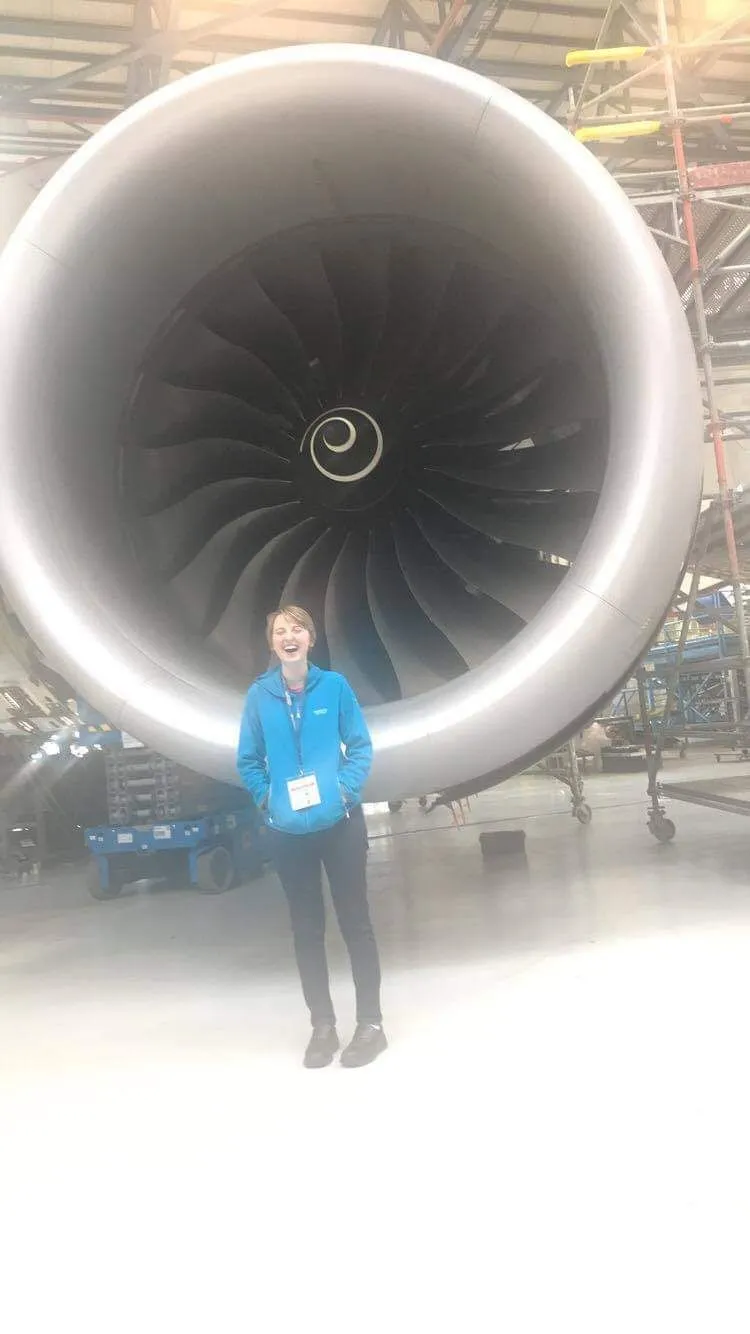
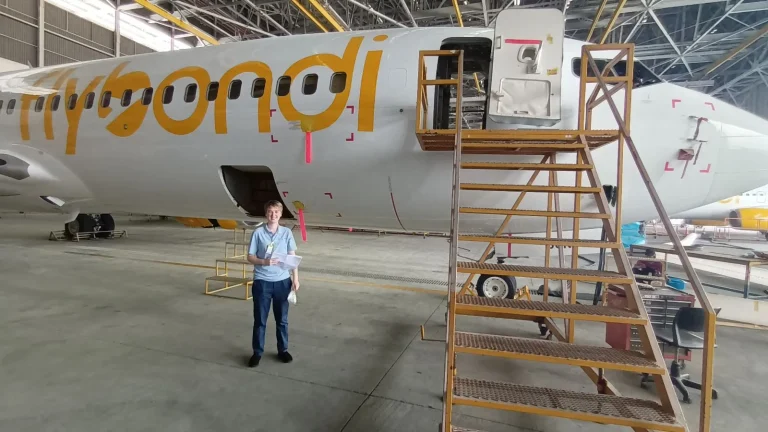
There are two that stand out. The first was my initial project as an Airworthiness Engineer, three ex-Garuda Indonesia 737 NGs. They were re-delivered from Garuda, went through a massive maintenance check, had a full cabin and livery change, and were delivered to the next customer. That project ran for about two years and I was lucky enough to travel to Malaysia twice to assist with the CofA inspections. There was a huge amount of work involved and it was a great learning experience.
The second is a project I’m still currently working on – two A321s that underwent a major modification to convert them from passenger aircraft to freighters. The conversion took place in Texas, and I was fortunate to go on site to see the work being carried out. We’re still managing those aircraft now, so it’s been an ongoing and really rewarding challenge. Getting to work with and share information with the design organisation was definitely a highlight.
Key Skills
What skills are most important in your role?
Thick skin – that’s the honest answer. You need good communication and you need to be able to fight your corner. We understand that CAMO can be perceived as strict by airlines and lessors because we enforce regulatory compliance, and if something isn’t compliant, there’s no flexibility around that. Regulations can mean more time for an aircraft on the ground, which can translate into high additional costs. But the CAMO has to play by the rules; safety is always paramount.
Being able to delegate is also crucial. You could have more than one aircraft at different stages of a project, possibly in different locations, so if you have support, you need to know how to split the work effectively. Attention to detail is critical too; you’re working with a serious amount of paperwork and you have to be able to spot incorrect part numbers or serial numbers on components that are incredibly important to an aircraft. And finally, you need to be able to think quickly on your feet. Projects can change in the space of a day depending on what the customer or the aircraft owner needs.
Industry Outlook
How do you see the aviation industry evolving in your field?
Drones are becoming more and more common and they’re getting more advanced and popular, so the question is whether there will be a CAMO requirement for drones. There’s already regulation there, but whether full continuing airworthiness management will be required for them remains to be seen. That’s one area to watch.
As for AI, I view it in CAMO the same way people view pilots in aircraft – you’re not going to get on a plane without a pilot. Where AI is at the moment, I wouldn’t trust it to do what we do. The human factor is still paramount and will remain so. Technology in aviation changes much more slowly than in other industries, and that’s for good reason.
Women in Technical Aviation
What has your experience been like as a woman in this sector?
Internally, there’s no distinction between me and the men in my department. I’m an Airworthiness Engineer, that’s it. Gender hasn’t really come into play, and STS has been a very positive environment in that respect.
In some regions, experiences can vary depending on the customer and local regulatory context and cultures. Early in one project, I needed to be quite direct on a technical call to clarify a compliance point. Because CAMO isn’t always a familiar concept in every regulatory environment, the message didn’t immediately land as intended. Afterwards, feedback was relayed that one party in the meeting said I had come across as “very demanding.” I chose to take that constructively, it meant the point had been heard.
It remains a male-dominated industry, and while things have improved significantly, there are still moments where you need to ensure your voice carries. The key is to stay clear and confident in your approach.
Advice for Future Talent
What advice would you give to young women considering a career in aviation?
Don’t be intimidated by the aviation industry as a whole. Yes, it is fairly male-dominated, but there are more and more women coming into this industry every year, which is great to see. We’re seeing more female pilots, and now we just need to start seeing more female engineers and mechanics excelling and being visible. It just takes one person to open the door, and then others follow.
Outside of Work
What keeps you motivated outside of the workplace?
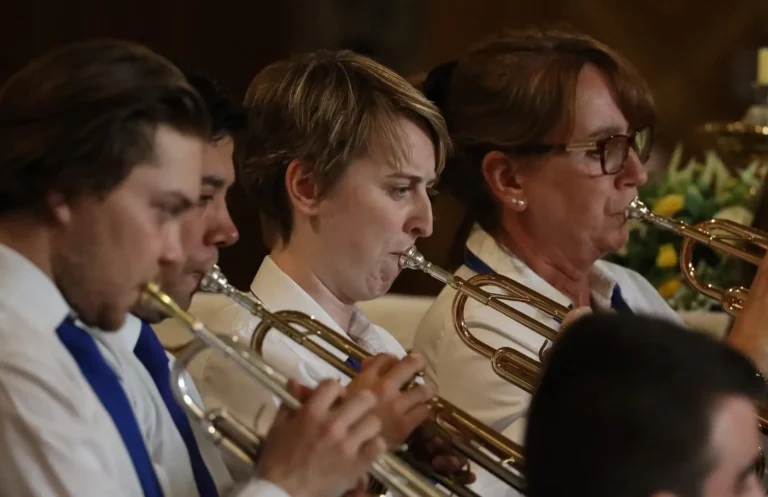
Music plays a huge role in my life. I play the trumpet and the cornet in two different groups – the Newmarket-on-Fergus Brass Band and the Redemptorist Centre of Music Concert Band. Getting to work together with other musicians to create something incredible is brilliant. It makes you focus, it makes you think, and you just want to work hard to play the best you can. Whether it’s a big concert band of fifty or sixty people, or a brass band of fewer than twenty, it really gives you the motivation to do your part.
I’m also a big fan of knitting and I’m getting into crochet. I’ve been knitting since I was very young and it really kicked in during COVID – jumpers, hats, Christmas stockings for colleagues. When I’m feeling stressed, I can just put something on the television and knit. It’s a great way to switch off and clear your head, which is important in a fast-paced job like this.
Anything Your Colleagues Might Not Know?
When I was younger, my first job was working in a boarding kennels for dogs, although my father would say my first job was stacking shelves and selling Christmas trees in the family corner store. Growing up in that environment taught me a lot about taking responsibility and ownership, and also especially good communication skills from a very young age.
Join Our Newsletter
Subscribe to receive our latest updates in your inbox!